
The Nation’s First Endocrinology Specialty Training Program for Nurse Practitioners

In 2016, Duke University School of Nursing (DUSON) was the first nursing school in the United States to launch an endocrinology specialty training program for nurse practitioners. The program originated due to the shortage of endocrinologists across the United States, with shortages of approximately 2,700 nationally, particularly in rural and underserved areas (Romeo, Hirsch, Lash, & Gabbay, 2020). As fellowships struggle to produce enough endocrinologists to meet patient demand, alternate pathways must be considered to increase the number of providers who can competently see patients with advanced diabetes and general endocrine conditions.
Under the leadership of Kathryn Kreider, DNP, a long-time endocrinology nurse practitioner (NP) at Duke and professor in the school of nursing, the program has flourished and now graduates approximately 18 NPs per year. The curriculum consists of two didactic courses including Advanced Diabetes Management and General Endocrinology, and one endocrinology clinical synthesis course.
The two didactic courses are largely distance-based with students participating from all over the country. The clinical course is 168 precepted hours with an endocrinologist or experienced endocrinology advanced practice provider (nurse practitioner or physician associate), an experience that is facilitated by the clinical placement office at DUSON. Students are typically able to remain close to home for clinical training, when appropriate training sites can be located. The program provides a strong foundational knowledge of the practice of endocrinology, a specialty that most advanced practice providers have learned on the job after traditional NP training.
Students include current DUSON nurse practitioner students as well as currently practicing and licensed NPs from across the country who come back for formal endocrinology training. Dr. Kathryn Kreider has presented the program curriculum and design across the country, including at meetings such as Endocrine Society and American Association of Clinical Endocrinologists. Several manuscripts have been published highlighting aspects of the program innovation (Kreider & Padilla, 2018; Kreider, Doyle, McGrath & Noya, 2025).
From the beginning, the program was a collaboration with Duke University Medical Center’s Division of Endocrinology, Metabolism and Nutrition. Many Duke endocrinologists provide invited guest lecturers and function as preceptors for students.

Dr. Jennifer Rowell has functioned as a preceptor and guest lecturer, as well as involvement in curriculum development. Dr. Rowell shared the following about her involvement in the program:
“Driven by a passion for teaching and a clear understanding of the growing need, I focused early in my career on educating and training endocrine specialty NPs. The talented and dedicated NPs we've recruited and trained have become indispensable to our practice, significantly impacting patient care amidst increasing demand. It has been incredibly rewarding to train and mentor these professionals, equipping both them and our patients with advanced knowledge and confidence in the field. The lasting relationships I've developed with many of my students, watching them flourish into sought-after specialists I trust for my own family and patients, have been particularly fulfilling. Looking forward, I am confident that endocrine specialty NPs will continue to be pivotal in our practice, especially as evolving technology and research create a greater need for their specialized expertise.”
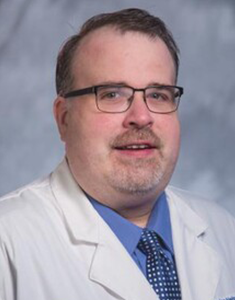
Brandon Nelson, MSN, was a graduate of the 2023 cohort. At the time of his enrollment, he was an NP practicing in rural Alaska. Brandon stated the following about his participation in the program:
“I was excited to be in the program because I sought the challenge of expanding from just diabetes, and some lipid management to more general endocrinology. My NP training focused more on primary care in the traditional setting of family practice. While we received general education on many of the issues specific to endocrinology, it lacked the depth and breadth of detailed endocrine medical management. Completing the program has been personally fulfilling and professionally rewarding. My career opportunities expanded, along with my knowledge base and skill set. I transitioned from my previous job, and I am now working for Duke Endocrinology.”
Similar to Brandon, many of the graduates of the program transition into formal roles as advanced practice providers in Duke’s division of Endocrinology, Metabolism and Nutrition.
Future plans for the program are being discussed, including a national expansion of the program to increase the number of graduates who are competent to provide endocrine care in under-resourced settings.