

DATE: Saturday, January 9, 2027
TIME: 7:30am - 5:00pm
LOCATION: JB Duke Hotel, 230 Science Drive, Durham, NC 27708 (map)
The course will be offered as a live, in-person event only.

Joint Accreditation Statement
This activity has been planned and implemented by the Duke University Health System Department of Clinical Education & Professional Development for the advancement of patient care. In support of improving patient care, the Duke University Health System Department of Clinical Education & Professional Development is accredited by the American Nurses Credentialing Center (ANCC), the Accreditation Council for Pharmacy Education (ACPE), and the Accreditation Council for Continuing Medical Education (ACCME), to provide continuing education for the health care team. CE Credit Pending.
Course Overview
The overall purpose of this event is to discuss advances in cardiac electrophysiology to enhance learners’ knowledge and competency to incorporate evidence-based updates in clinical practice. The recent developments in the field of cardiac electrophysiology, including novel drugs, new devices, and care innovations inform the current effort to improve cardiac electrophysiology education and refine approaches to disease management for clinicians. Clinicians must remain informed of the most up-to-date evidence to guide optimal treatment strategies and improve outcomes for patients living with heart rhythm disorders.
Agenda
| TIME | TOPIC | SPEAKER(S) |
|---|---|---|
| 7:00-7:30am | Registration & Breakfast | |
| 7:30-7:40am | Welcome & Introduction | Jonathan Piccini, MD, MHS |
| 7:40-8:30am | Keynote Lecture: Artificial Intelligence and Electrophysiology | Benjamin Steinberg, MD |
Session 1: Hot Topics in Atrial Fibrillation (AF) (60 min)
Moderators: TBD
| TIME | TOPIC | SPEAKER(S) |
|---|---|---|
| 8:30-8:40am | Managing AF – Beyond Drugs and Ablation | Kevin Jackson, MD |
| 8:40-8:50am | Nuts and Bolts of Wearables for AF Monitoring | Zak Loring, MD |
| 8:50-9:00am | What You Should Know About the New AF Quality Measures | Larry Jackson, MD |
| 9:00-9:10am | What is Premature AF and What Should You Know About It? | Jonathan Piccini, MD, MHS |
| 9:10-9:20am | Management of AF in Athletes | James Daubert, MD |
| 9:20-9:30am | What is Atrial Cardiomyopathy and Why Does It Matter? | Sean Pokorney, MD |
| 9:30-9:40am | I Want a New (Antiarrhythmic) Drug – One That Won’t Make Me Sick | Kristen Campbell, PharmD |
| 9:40-10:10am | Break |
Session 2: Cases, Unknowns, Dilemmas, & Teaching Rounds (80 min)
Moderators: TBD
| TIME | TOPIC | SPEAKER(S) |
|---|---|---|
| 10:10-10:30am | Remote Monitoring Rounds | Donald Hegland, MD |
| 10:30-10:50am | PVC Localization | Albert Sun, MD |
| 10:50-11:10am | ECG Unknowns | Larry Jackson, MD |
| 11:10-11:30am | Cardiac MRI – Tips and Tricks for the Non-Imager | Donald Hegland, MD |
Session 3: Catheter Ablation for Atrial Fibrillation (40 min)
Moderators: TBD
| TIME | TOPIC | SPEAKER(S) |
|---|---|---|
| 11:30-11:40am | PFA: The End of the Beginning | Jonathan Piccini, MD, MHS |
| 11:40-11:50am | Who Should Get an AF Ablation in 2026? Is it Ever “Too Early”? | Kevin Thomas, MD |
| 11:50am-12:00pm | Same As It Ever Was: How Should We Ablate Persistent AF? | Jason Koontz, MD |
| 12:00-12:10pm | AI Guided Mapping and Ablation of AF | Zak Loring, MD |
| 12:10-1:10pm | Lunch |
Session 4: Stroke Prevention in Atrial Fibrillation (75 min)
Moderators: TBD
| TIME | TOPIC | SPEAKER(S) |
|---|---|---|
| 1:10-1:20pm | Oral Anticoagulation After AF Ablation: ALONE, OCEAN, & REACT | Benjamin Steinberg, MD |
| 1:20-1:30pm | Factor XI Inhibitors – Contender or Pretender? | Kristen Campbell, PharmD |
| 1:30-1:40pm | Left Atrial Appendage Occlusion or Confusion: CHAMPION & CLOSURE | Sean Pokorney, MD |
| 1:40-1:50pm | Concomitant LAAO | Kevin Thomas, MD |
| 1:50-2:00pm | What To Do With CHADS-VASc 1 and Other Conundrums | Robert Lewis, MD |
| 2:00-2:25pm | Panel Discussion and Q&A | Above speakers |
| 2:25-2:55pm | Break |
Session 5: Ventricular Arrhythmia Management (50 min)
Moderators: TBD
| TIME | TOPIC | SPEAKER(S) |
|---|---|---|
| 2:55-3:05pm | New Approaches and Technologies for Catheter Ablation of VT | Jason Koontz, MD |
| 3:05-3:15pm | Catheter Ablation of Ventricular Fibrillation | Albert Sun, MD |
| 3:15-3:25pm | Neuromodulation for Ventricular Arrhythmias | Ching Zhu, MD |
| 3:25-3:35pm | Update in Inherited Arrhythmias: Gene Therapy & Beyond | James Daubert, MD |
| 3:35-3:45pm | Panel Discussion | Above speakers |
Session 6: Pacing, Defibrillation, and Devices (70 min)
Moderators: TBD
| TIME | TOPIC | SPEAKER(S) |
|---|---|---|
| 3:45-3:55pm | Cardiac Contractility Management | Daniel Friedman, MD |
| 3:55-4:05pm | Updates in Lead Management | Robert Lewis, MD |
| 4:05-4:15pm | Conduction System Pacing – Everything You Need to Know | Daniel Friedman, MD |
| 4:15-4:25pm | Contemporary Cardiac Resynchronization Therapy | Kevin Jackson, MD |
| 4:25-4:35pm | Expanding Leadless Pacing | Camille Frazier-Mills, MD |
| 4:35-4:45pm | New Defibrillator Technologies | Sean Pokorney, MD |
| 4:45-4:55pm | Dysautonomia – the Post-COVID Era | Camille Frazier-Mills, MD |
| 4:55-5:00pm | Concluding Remarks & Adjourn | Jonathan Piccini, MD, MHS |
Course Director
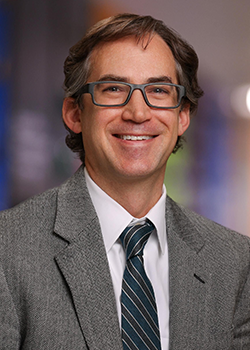
Dr. Jonathan Piccini, MD, MHS
Ursula Geller Distinguished Professor of Research in Cardiovascular Diseases
Professor of Medicine
Director, Cardiac Electrophysiology Section
Professor in Population Health Sciences
Member in the Duke Clinical Research Institute
Invited Speakers
Kristen Campbell, PharmD
James Daubert, MD
Professor of Medicine
Duke University
Camille Frazier-Mills, MD
Professor of Medicine
Duke University
Daniel Friedman, MD
Associate Professor of Medicine
Duke University
Donald Hegland, MD
Associate Professor of Medicine
Duke University
Kevin Jackson, MD
Associate Professor of Medicine
Duke University
Larry Jackson, MD
Associate Professor of Medicine
Duke University
Jason Koontz, MD
Associate Professor of Medicine
Duke University
Robert Lewis, MD, PhD
Assistant Professor of Medicine
Duke University
Zak Loring, MD
Associate Professor of Medicine
Duke University
Sean Pokorney, MD
Assistant Professor of Medicine
Duke University
Benjamin Steinberg, MD, MHS
Director of Cardiac Electrophysiology, Denver Health
Professor of Medicine
University of Colorado Anschutz
Albert Sun, MD
Associate Professor of Medicine
Duke University
Kevin Thomas, MD
Donald F. Fortin, MD Distinguished Professor of Cardiology
Duke University
Ching Zhu, MD, PhD
Assistant Professor of Medicine
Duke University
Target Audience
This program is designed to meet the continuing education (CE) needs of physicians, nurses, advanced practice providers and other allied healthcare professionals involved in the treatment of patients with heart rhythm disorders.
Learning Objectives
At the conclusion of this activity, participants should be able to:
Recognize the current guideline-directed treatments for atrial fibrillation, including emerging evidence in risk factor reduction, stroke prevention, rhythm control, and catheter ablation.
Discuss the evolving landscape of pulsed field ablation, including the impact, safety, and efficacy of this emerging ablation technology.
Discuss diagnostic and treatment strategies for arrhythmia disorders, aiming to enhance early recognition and improve clinical outcomes for patients with atrial cardiomyopathies, premature onset atrial fibrillation, ventricular arrhythmias, and genetic cardiomyopathies.
Describe the role of wearables and remote monitoring in the continuum of heart rhythm care.
Summarize the evidence for left atrial appendage occlusion versus other stroke prevention therapies, including direct acting oral anticoagulants.
Identify the optimal use of pacing technologies in a variety of conduction disorders, including the use of leadless devices, conduction system pacing, and cardiac resynchronization therapies.
Registration & Fees
- Industry representatives: $500
- Physicians: $200
- Non-physicians (NPs, PAs, nurses, pharmacists, allied health professionals, etc.): $50
Industry Exhibits at the Symposium
For more information on exhibiting at the symposium, please email Christy Darnell.
Cancellation Policy
All cancellation requests must be submitted in writing to Christy Darnell via email (christy.darnell@duke.edu). There will be no refunds if cancellations are made after December 9, 2026.
Claiming CE Credit After the Symposium
To complete all course requirements and claim continuing education credits, please do the following:
- Sign in at the registration desk.
- Receive email from Duke CME office with link to the course evaluation.
- Complete the course evaluation.
- Attest to your hours of completion.
Download your certificate.