
The Duke Department of Medicine is redefining what it means to deliver exceptional care in an academic medical center. The department is contributing to Duke’s academic learning health system, where continuous improvement and innovation are woven into everyday practice.
The work strengthens Duke’s longstanding commitment to excellence in research, education, and patient care—while accelerating progress toward better outcomes for every patient and every community we serve.
DOM QI Initiatives
The Department of Medicine offers faculty across the Department of Medicine the opportunity to participate in a year long initiative to advance quality patient care across Duke University Health System. Through monthly planned didactic sessions and access to quality improvement engineers, faculty will learn and apply the skills necessary to implement meaningful changes through rapid cycle improvement. At the end of the program, participants will have gained the knowledge to run future quality improvement projects and empower others to do the same. These initiatives encourage multidisciplinary teamwork and allow for an academic product suitable for national level journal publication.
- Reducing Process Variation in Lung Transplant Evaluation: A Patient-Centered Improvement Initiative (Laurie Snyder, MD, MHS and Andrea Grillini, MD, Division of Pulmonology)
- Improving Cancer-Associated Venous Thromboembolism Racial Disparities at Duke University Health System (Andrew Peseski, DO, Division of Hematology)
- Improving Medication Adherence for patients with Lupus Nephritis (Lisa Criscione-Schreiber, MD, MEd and Frank Cai, MD, Division of Rheumatology)
- Reducing Low-Value ANA Testing (David Leverenz, MD, MEd and Ann Cameron Barr, MD, Division of Rheumatology)
- Optimizing GDMT for HFrEF at the Duke Outpatient Clinic (Akshay Pendyal, MD, MHS and Alexandra Novelli, MD, Division of Cardiology)
- Strategy for the Elimination of Hepatitis C in the Duke University Health System (Jackie Henson, MD and Andrew Muir, MD, MHS, Division of Gastroenterology)
- Improving Asthma Control in Adults (Isaretta Riley, MD, MPH and Sangeeta Joshi, MD, MBBS, Division of Pulmonology)
- Improving Inpatient Delirium Screening and Management (Neema Sharda, MD, Division of Geriatrics)
Proposal applications for this opportunity open in December/January each year. If the proposal is chosen to advance, investigators will be asked to submit a full application by May. Final notification of acceptance will occur in June, with a start date of September 1st. Each year, two to three projects will be chosen to participate in this program alongside CACHE work and other health system quality initiatives.
Quality Improvement Training Opportunities
The Department of Medicine introduces medical students to the core principles of quality improvement and patient safety. Through clerkships and electives, students gain early experience with improvement science, teamwork, and systems-based practice—preparing them to contribute meaningfully to Duke’s academic learning health system as they advance in training.
The Duke Internal Medicine Residency Program embeds quality improvement and patient safety into every stage of training, giving residents the skills and experience to lead safer, higher-value care. Through a blend of structured teaching, real-time safety event analysis, individualized performance data, and resident-driven improvement projects supported by dedicated faculty leaders, the program builds a strong culture of teamwork, accountability, and continuous learning.
Graduates leave prepared to improve systems, elevate care quality, and advance patient safety in any clinical environment.
Digital Health Training Program Duke Internal Medicine Residency Quality Improvement
Duke’s subspecialty fellowship programs prepare physicians to lead in a rapidly evolving health care environment by integrating quality improvement and patient safety into advanced clinical training. Fellows work closely with expert faculty to analyze care processes, identify opportunities for improvement, and lead projects that strengthen outcomes across patient populations.
Through structured education, hands-on improvement work, and interdisciplinary collaboration, fellows develop the skills needed to drive innovation and contribute meaningfully to Duke’s academic learning health system.
The Department of Medicine supports lifelong learning by offering continuing education programs that help clinicians strengthen quality improvement and patient safety skills. Through workshops, seminars, and accredited learning activities, faculty and practicing providers gain practical tools to evaluate care processes, implement evidence-based improvements, and enhance clinical outcomes.
CME offerings reinforce a culture of continuous learning and help ensure that clinicians remain prepared to lead and participate in improvement efforts across Duke’s academic learning health system.
Meet the Team
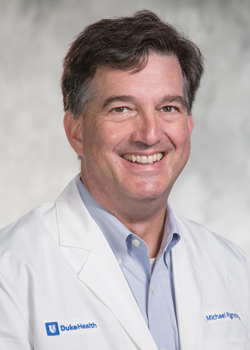
Vice Chair, Quality and Innovation
Duke Department of Medicine

Management Engineer, Quality & Innovation
Duke Department of Medicine
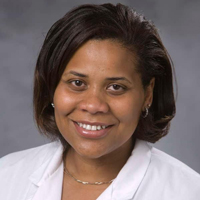
Camille Frazier-Mills, MD, MHS
Professor of Medicine
Division of Cardiology
Dr. Frazier-Mills is a cardiac electrophysiologist whose work emphasizes patient safety, care standardization, and equity in cardiovascular care. She leads quality improvement efforts focused on improving clinical outcomes and patient experience across cardiology services.

Michael Canos, MD, MPH, MSc
Associate Professor of Medicine
Division of Endocrinology, Metabolism, and Nutrition
Dr. Canos specializes in diabetes and metabolic disorders. His quality improvement leadership centers on optimizing chronic disease management, patient education, and evidence‑based endocrine care.
Melissa Teitelman, MD, MS
Professor of Medicine
Division of Gastroenterology
Dr. Teitelman’s quality improvement efforts center on colon cancer screening and colonoscopy performance, ensuring alignment with national benchmarks. Under her leadership, the division has implemented triage and scheduling initiatives to expedite diagnostic evaluations. She also contributes to the Liver Transplant Program, which monitors key metrics such as evaluation timeliness, wait‑list mortality, and survival, with program physicians developing annual QI projects to drive performance. She supports high‑value, multidisciplinary care through collaborative transplant hepatology and inflammatory bowel disease clinics, and is guiding the expansion of services with new programs in celiac disease, endobariatrics, and functional bowel disorders.

Elizabeth Malcolm, MD, MSHS
Assistant Professor of Medicine
Division of General Internal Medicine
Dr. Malcolm focuses on primary care quality, chronic disease management, and patient engagement. She supports division‑wide efforts to strengthen reliability, teamwork, and health outcomes.
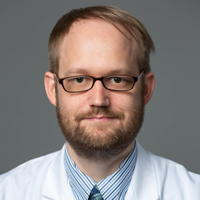
David Schlientz, MD
Assistant Professor of Medicine
Division of Geriatrics and Palliative Care – Section of Geriatric Care
Dr. Schlientz is a Geriatrician practicing in inpatient and ambulatory settings, primarily at Duke Raleigh Hospital, where he serves as Medical Director of Geriatrics. His quality improvement work focuses on EHR-based interventions to promote care consistent with the 4Ms (Medications; Mobility; Mentation; (What) Matters Most) of the Age-Friendly Health Systems movement, such as the 4M’s Plus SOLAR inpatient rounding report, which has incorporated lessons from the delirium care redesign initiative. He believes that understanding and improving safety and quality of multidisciplinary workflows will enable world-class care for older adult patients.
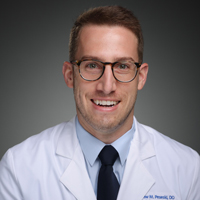
Andrew Peseski, DO
Assistant Professor of Medicine
Division of Hematology
Dr. Peseski is committed to improving care delivery and safety for patients with complex blood disorders. His QI efforts emphasize standardized clinical pathways and improved coordination.

Andrea Sitlinger, MD
Assistant Professor of Medicine
Hematologic Malignancies and Cellular Therapy
Dr. Sitlinger leads quality initiatives in hematologic malignancies, with an emphasis on patient-centered care, symptom management, and improving outcomes for hematologic cancer patients.

Tom LeBlanc, MD, MA
Associate Professor of Medicine
Division of Hematologic Malignancies, and Cellular Therapy
Dr. Sitlinger and LeBlanc jointly lead quality initiatives in hematologic malignancies, with an emphasis on patient-centered care, symptom management, and improving outcomes for patients undergoing intensive therapies.

Michelle Perkons, MD
Assistant Professor of Medicine
Division of Hospital Medicine
Dr. Perkons is an Assistant Professor of Medicine in the Division of Hospital Medicine at Duke University School of Medicine, the Associate Medical Director for Quality for the Hospital Medicine Program at Duke University Hospital, and a practicing hospitalist at Duke University Hospital. Her interests include trainee engagement in quality and safety processes, studying and learning from diagnostic delays, and mortality reduction. Dr. Perkons has published and presented nationally on her work, and she currently serves on the Duke University Health System Mortality Review Committee and as the director of the Morbidity and Mortality program for her Hospital Medicine group. Dr. Perkons is committed to advancing team-based approaches to care and integrating quality and safety principles into physician training.
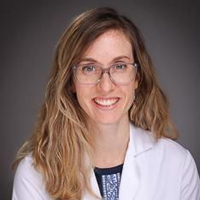
Molly McDonough, MD
Assistant Professor of Medicine
Division of Infectious Diseases
Dr. McDonough is an Assistant Professor of Medicine in the Division of Infectious Diseases. She is a clinician educator with an academic focus in quality improvement and patient safety. She is the Associate Program Director for the ID fellowship program and is the Medical Director of the General ID Outpatient Parenteral Antimicrobial Therapy (OPAT) program. In her work as medical director, she has implemented a telemedicine clinic to improve post-hospitalization follow-up for patients receiving OPAT. She leads a quality improvement curriculum for ID fellows and HIV clinic team members to improve care delivery for persons with HIV. Her clinical practice is grounded in bringing evidence-based care to each patient as an individual.
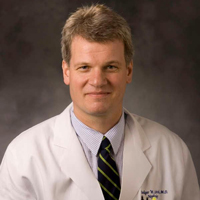
Ruediger Lehrich, MD
Professor of Medicine
Division of Nephrology
Dr. Lehrich focuses on improving the quality and coordination of care for patients with kidney disease. His QI efforts emphasize value-based care and improved outcomes for complex medical populations.

Edwin Alyea, MD
Instructor
Hematologic Malignancies and Cellular Therapy
Dr. Alyea co-leads oncology quality improvement efforts, focusing on care delivery innovation, patient experience, and outcomes across the cancer care continuum.

Lisa Pickett, MD
Assistant Professor of Medicine
Division of Geriatrics and Palliative Care – Section of Palliative Care
Dr. Pickett is dedicated to increasing communication with patients and collaboration with leaders and clinical teams to create patient-centered care for individuals with complex serious illness. She leads initiatives that integrate palliative principles across clinical settings.

Daniel Gilstrap, MD
Assistant Professor of Medicine
Division of Pulmonary, Allergy, and Critical Care Medicine – Section of Critical Care Medicine
Dr. Gilstrap’s quality work focuses on improving ICU care, clinical outcomes, and system reliability for critically ill patients.
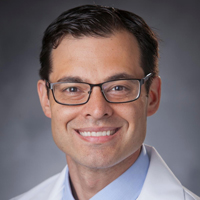
Jayanth Doss, MD, MPH
Associate Professor of Medicine
Division of Rheumatology and Immunology
Dr. Doss focuses on advancing quality improvement in the care of patients with chronic autoimmune and inflammatory diseases, with attention to access, consistency, and patient outcomes.
Related Initiatives & Collaborations
Center for Advanced Healthcare Analytics (CACHE)
Duke Department of Medicine faculty are actively engaged in CACHE-led projects advancing applied AI and data-driven innovation in healthcare.
PCORI Health Systems Implementation Initiative (HSII)
Duke faculty lead and contribute to national implementation studies, including hypertension management and electronic patient-reported outcomes (ePROs).