
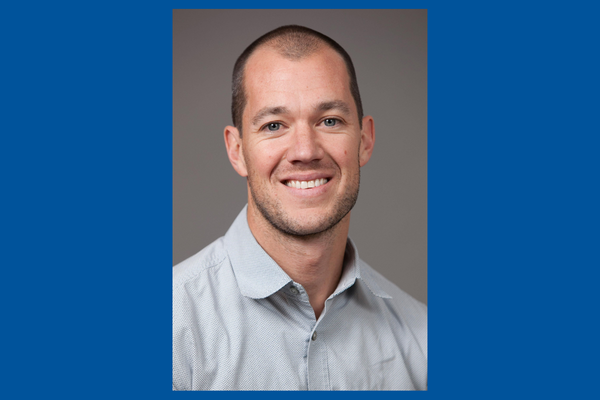
Matthew Hirschey, PhD, associate professor of medicine in the Division of Endocrinology, Metabolism, and Nutrition, has received an NIDDK Catalyst Award expected to provide more than $4 million over five years to investigate a fundamental question in metabolism: What determines the concentration of metabolites in cells?
The project’s ultimate goal: move metabolism from a descriptive to a predictive science and open up new possibilities for treating metabolic disease. The National Institute of Diabetes and Digestive and Kidney Diseases award uses the NIH DP1 mechanism to support an individual investigator pursuing a single ambitious idea in a genuinely new research direction.
Scientists can accurately measure thousands of metabolites, but they still cannot fully explain how cells maintain specific concentrations. Blood glucose, for example, stays near 5 millimolar regardless of how much someone is able to eat.
Hirschey hypothesizes that abnormal metabolite levels in diseases such as diabetes may reflect disrupted control systems rather than simply broken metabolic pathways. For example, in type 2 diabetes, branched-chain amino acids, which are nutrients used for energy and growth, can rise two to three times above normal levels.
“I think it’s a broken control circuit, which points at a different kind of drug,” Hirschey said.
The project will develop an Integrated metabolic control discovery platform that identifies molecular components responding to metabolite changes, computationally reconstructs how they form control circuits, and then tests those circuits in systems ranging from cell lines to human organoids.
Artificial intelligence will play a key role in reconstructing those circuits. Hirschey’s lab previously used its data-driven hypothesis platform to predict that acute myeloid leukemia cells depend on a particular metabolic pathway to survive. The finding was experimentally validated and published in Nature Metabolism in 2025.
The new award will apply that prediction-to-testing approach to metabolite control.
Hirschey co-founded Heureka Labs, a company that grew from the Data-Driven Hypothesis platform. The relationship is disclosed through Duke’s conflict-of-interest process.
The research is supported by NIDDK award DP1DK147833.