
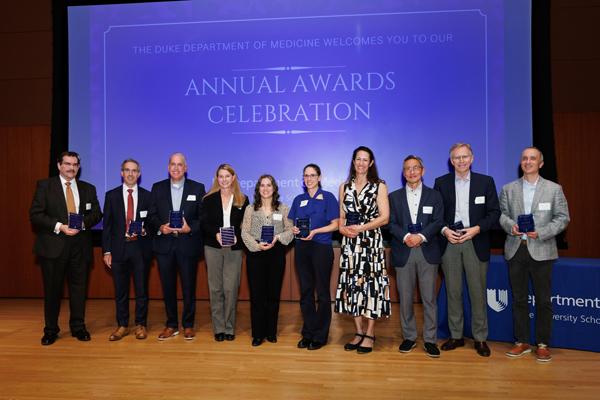
The Duke Department of Medicine Clinical Excellence Society welcomed its third cohort of inductees at the Department’s annual awards and recognition ceremony.
Membership in the Department’s Clinical Excellence Society honors individuals who have demonstrated outstanding clinical skill, leadership, and commitment to advancing the practice of medicine. These clinicians are selected for their impact on patient outcomes, contributions to clinical innovation, and efforts to mentor and support the next generation of healthcare providers.

Eugene C. Kovalik, MD
Professor of Medicine
Nephrology
With more than three decades of clinical experience, Dr. Kovalik has earned a reputation for excellence that is both enduring and deeply respected.
As noted by longtime colleague Dr. David Butterly, his career has been defined by exceptional clinical skill, sound judgment, and a steadfast commitment to patient-centered care. Colleagues routinely turn to him for guidance on complex cases, reflecting a rare ability to synthesize deep medical knowledge into thoughtful, well-reasoned decisions, Dr. Butterfield noted.
His leadership at DaVita Roxboro, recognized as a 5-Star Clinic, further underscores a consistent dedication to quality and outcomes. Equally notable is his approach to patient care, marked by clear communication, empathy, and compassion that fosters profound trust and gratitude among those they serve.
Dr. Kovalik’s clinical expertise, integrity, and leadership embody the highest standards of the profession and reflect a career devoted not only to excellence but to the people at the center of it.
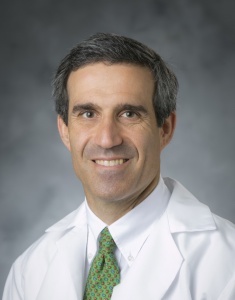
John J. Strouse, MD, PhD
Associate Professor of Medicine
Hematology
Nominated by Division Chief Dr. Tom Ortel, Dr. Strouse is widely recognized for a deep and sustained commitment to advancing care for patients with sickle cell disease, his work reflecting a passion for delivering high-quality, patient-centered care while building the systems needed to support it.
Through efforts to strengthen the Sickle Cell Day Hospital — ensuring the personnel and infrastructure necessary to reduce Emergency Department utilization — he has improved access and continuity of care.
Dr. Strouse has also driven innovation across the care continuum, establishing an inpatient sickle cell consult service to support smoother transitions at discharge and expanding outpatient access through new clinic offerings at Duke Raleigh.
Beyond Duke his impact is felt nationally and internationally, including as a coauthor of the 2020 American Society of Hematology pain management guidelines and widely cited publications such as “How I treat sickle cell disease in pregnancy” in Blood.
Equally notable is his leadership in designing effective quality improvement programs and his commitment to integrating clinical care data with research initiatives.
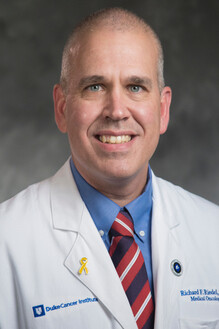
Richard F. Riedel, MD
Professor of Medicine
Medical Oncology
Nominated by Division Chief Dr. Diane Reidy-Lagunes, Dr. Riedel exemplifies the best of clinical medicine — an exceptional clinician, trusted advisor, innovative leader, and deeply committed mentor.
Dr. Riedel’s career reflects more than two decades of dedication to Duke, where he has trained and served since arriving as an intern in 2000, later becoming Chief Resident and joining the faculty in 2004.
Nationally recognized for expertise in sarcoma care, he brings a thoughtful, evidence-based approach to some of the most complex and high-stakes oncologic decisions. His work is defined not only by clinical excellence but by a steady ability to guide patients and colleagues through the challenges of a devastating disease with clarity and precision.
Dr. Riedel has also played a central role in shaping the next generation of physicians. A pillar of the fellowship program and Program Director since 2020, his leadership has helped define a culture of rigorous training, mentorship, and professional growth, and his scholarly contributions have further advanced the field, helping to establish modern international standards of care.
Taken together, their clinical expertise, academic impact, and enduring commitment to mentorship represent a career of remarkable influence and distinction.
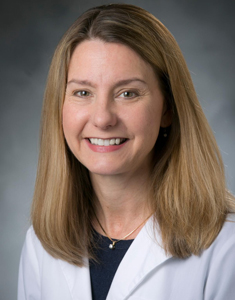
Rachel A. Miller, MD
Professor of Medicine
Infectious Diseases
Nominated by Division Chief Dr. Andy Alspaugh, together with Drs. Ted Hendershot and Jennifer Saullo, Dr. Miller is widely regarded as among the very best in the field of transplant infectious diseases, both at Duke and nationally.
Her career has been defined by a rare combination of clinical mastery, leadership, and sustained impact. She founded the Transplant Infectious Diseases program at the University of Iowa and, for nearly two decades as its sole faculty member, guided the care of increasingly complex patients with solid-organ transplants and hematologic malignancies.
At Duke, she now leads the Transplant ID clinical enterprise, offering guidance while fostering strong, collaborative relationships across multidisciplinary teams caring for highly vulnerable patients. Dr. Miller’s leadership style — marked by humility paired with clear, decisive clinical direction— has earned deep respect from colleagues and trainees alike.
Beyond her institutional contributions, Dr. Miller has helped shape the field at a national level, playing a key role in establishing widely recognized treatment guidelines. She is also a dedicated educator, thoughtfully integrating fellows into the care of complex transplant patients and modeling excellence at the bedside.
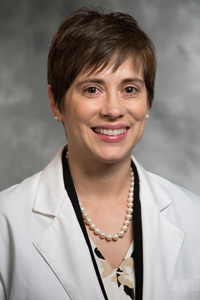
Milta O. Little, DO, CMD
Professor of Medicine
Geriatrics and Palliative Care
Nominated by Dr. Heidi White, Division Chief Dr. Cathleen Colón-Emeric and Dr. Shelley McDonald, Dr. Little is described as a shining example of clinical excellence — an accomplished clinician with outstanding academic credentials and a clear commitment to continuous growth.
Her work is distinguished by an approachable, collaborative style and a deep dedication to advancing the field of geriatric medicine.
Dr. Little brings particular expertise to the complexities of dementia care, pairing clinical insight with a holistic perspective that addresses the medical, social, and emotional dimensions of health.
At The Forest at Duke, her calm, decisive leadership — especially her focus on thoughtful deprescribing — has measurably improved quality of life for older adults, earning the trust and gratitude of patients and families alike.

Jennifer L. Rogers, MD
Associate Professor of Medicine
Rheumatology and Immunology
Nominated by Division Chief Dr. Megan Clowse, along with Drs. Bill St. Clair and Ankoor Shah, Dr. Rogers is recognized for transformative leadership and exceptional clinical expertise in lupus care.
Under her direction, the Duke Lupus Clinic has evolved into a highly advanced clinical program, with its growth and impact reflecting a standard of excellence that distinguishes candidates for the Clinical Excellence Society.
Widely regarded as an expert in the diagnosis and treatment of lupus, Dr. Rogers brings a clinical approach that balances empathy with decisiveness — offering patients both a reassuring presence and clear, confident care. Her work is defined by a commitment to comprehensive, multidisciplinary treatment that addresses the full complexity of this chronic disease.
Dr. Rogers has also driven meaningful innovation in the field with the development of the Type 1 and Type 2 Lupus Model, which has been rapidly adopted across the lupus community, shaping how clinicians understand and manage the disease.
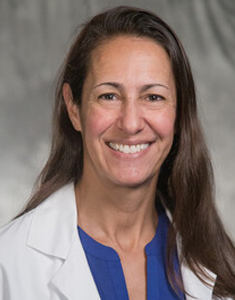
Daniella Zipkin, MD
Professor of Medicine
General Internal Medicine
Nominated by Division Chief Dr. Nicole Hastings, Dr. Zipkin is recognized for a career defined by deep attentiveness to patients, meticulous clinical assessment, and a willingness to think creatively in the face of complex diagnostic challenges.
Widely sought after for expertise in musculoskeletal medicine and nonspecific pain syndromes, she brings clarity and insight to cases that often confound others.
Dr. Zipkin’s commitment to continuity and excellence in care is reflected in her seamless assumption of Dr. Greenblatt’s patient panel, ensuring patients experienced a smooth transition without compromising quality.
Beyond the clinic, she has built a lasting impact as a clinician-educator, shaping both patient care and the development of future physicians.

Andrew Wang, MD
Professor of Medicine
Cardiology
Nominated by Division Chief Dr. Manesh Patel, Dr. Wang embodies every aspect of the Clinical Excellence Society’s mission — an extraordinary clinician, an innovator in patient care, a dedicated advocate for excellence, and a mentor whose influence spans generations.
With more than 25 years of continuous clinical practice at Duke, his career reflects both longevity and sustained impact at the highest level.
Dr. Wang is widely trusted for his calm, insightful, and deeply compassionate approach, with colleagues frequently referring their most challenging cases in recognition of their exceptional clinical judgment and unwavering commitment to patient-centered care.
At the bedside, he brings a rare combination of expertise and empathy that consistently earns the confidence of both patients and peers.
Dr. Wang’s leadership has also been instrumental in shaping the institution’s clinical and educational mission. As Director of the Cardiovascular Disease Fellowship Training Program and later as Vice Chief for Clinical Affairs, he strengthened clinical operations while helping to train and mentor the next generation of cardiologists.

John M. Reynolds, MD
Professor of Medicine
Pulmonary, Allergy and Critical Care
Nominated by Division Chief Dr. Loretta Que, Dr. Reynolds is recognized as an internationally acclaimed leader in lung transplantation, bringing a clear and sustained vision that has advanced the program’s standing as a global leader in patient care.
His work spans the full transplant continuum, where a hallmark of their practice is ensuring that no patient feels rushed — each individual is made to feel seen, known, and genuinely cared for.
He is particularly noted for an exceptional ability to translate the most complex clinical situations into clear, understandable guidance, empowering patients to make informed decisions with confidence. This combination of technical expertise and human connection defines her approach at the bedside.
Colleagues describe Dr. Reynolds as both a master clinician and a dedicated educator, whose compassion, kindness, and unwavering commitment to patient-centered care set a standard for others to follow.
Widely regarded as “the doctor’s doctor,” he is frequently sought out for insight on the most challenging cases and is deeply embedded in every facet of the lung transplant program.

Daniel M. Wild, MD
Professor of Medicine
Gastroenterology
Nominated by Division Chief Dr. Andrew Muir, Dr. Wild is recognized for vision and initiative that have transformed care for patients with complex small bowel disease.
By developing an advanced small bowel endoscopy program — supported by additional specialized training — he expanded Duke’s capabilities to a level that now positions it as a regional referral center and as the only one in North Carolina.
Dr. Wild’s work has not only advanced procedural care but also improved the evaluation and management of complex patients. He established a thoughtful consultation model that brings clarity and coordination to challenging clinical scenarios, ensuring patients receive comprehensive, well-integrated care.
Equally notable is his accessibility and collaborative spirit. Colleagues consistently seek his input and value his willingness to engage in detailed discussions about patient care, reflecting both expertise and a deep commitment to shared decision-making.