
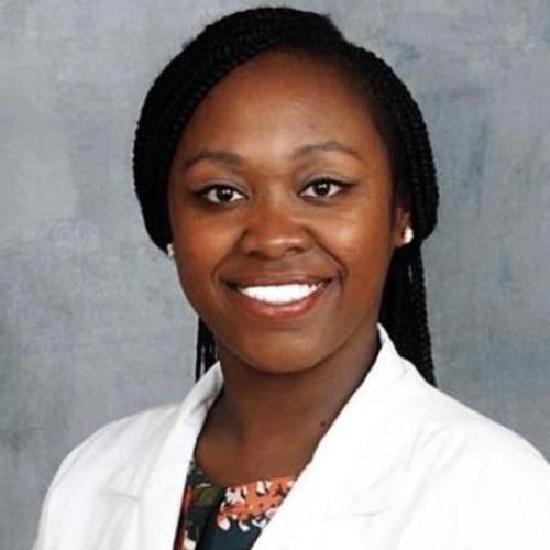
Dr. Jashalynn German, an assistant professor in the Duke Division of Endocrinology, Metabolism and Nutrition and a Durham VA staff physician, has been selected for the national NIH K12 Physician-Scientist DiabDocs Program, a multi-center career development program designed to support the next generation of physician-scientists conducting diabetes research.
For adults living with both type 2 diabetes and obesity, the treatment landscape has changed rapidly. Newer incretin-based medications and metabolic or bariatric surgery offer meaningful opportunities to improve health, but patients are often left to navigate complex decisions without consistent information or structured support.
Dr. German’s project focuses on a growing challenge in diabetes and obesity care: helping patients make informed decisions about treatment options, including newer incretin-based medications such as GLP-1 therapies and metabolic or bariatric surgery.
Structured Support
“Patients are often navigating difficult, highly personal decisions about therapies that can dramatically affect their health and quality of life,” Dr. German said. “But many patients do not receive structured support to help them understand their options, clarify what matters most to them, and engage in shared decision-making with their clinicians.”
More than 28 million adults in the United States live with both type 2 diabetes and obesity, conditions that significantly increase the risk of cardiovascular disease, disability, and premature death.
While newer medications and bariatric surgery have transformed treatment possibilities, uptake remains surprisingly low nationwide. Fewer than 12 percent of eligible patients receive anti-obesity medications, and less than one percent undergo bariatric surgery annually.
Dr. German’s research seeks to understand why.
Her three-year project will develop and pilot-test a patient-facing decision support tool designed to help adults with type 2 diabetes and class 3 obesity better understand treatment choices and participate more fully in care decisions. The tool will compare the benefits, risks, lifestyle considerations, and costs associated with incretin-based therapies and bariatric surgery.
The project combines qualitative research, user-centered design and implementation science to create a tool grounded in real-world patient and clinician experiences.
In the first phase of the study, Dr. German will identify barriers to treatment discussions and better understand patients’ decisional needs. She will then work collaboratively with patients and clinicians to design and refine the decision support tool through co-design sessions. The tool will be tested in a pilot study involving adults preparing for routine endocrinology or primary care visits. Researchers will evaluate whether the decision support tool improves patients’ understanding of treatment options, reduces decisional conflict and, better prepares them for shared decision-making conversations with their clinicians.
Practical, Patient-Centered Tools
“I’ve seen how stigma, fragmented care pathways and inconsistent communication can create major barriers to effective obesity treatment,” she said. “This work is about creating practical, patient-centered tools that support people in making informed decisions aligned with their values and goals.”
Dr. German will be mentored by a multidisciplinary team that includes primary mentor Dr. Matthew Crowley, along with co-mentors Drs. Bryan Batch, Jennifer Gierisch and Anna Hung.
The DiabDocs award will also provide advanced training in qualitative methods, decision aid development, implementation science, and grant writing — experiences German says are critical to her long-term goal of becoming an independent investigator focused on patient-centered diabetes and obesity care.
During the program, Dr. German plans to pursue additional career development funding to expand evaluation and implementation of the decision support tool in broader patient populations, including Veterans.
Incredible Opportunities
“DiabDocs offers a unique environment where every scholar is focused on diabetes research,” Dr. German said. “That creates incredible opportunities for mentorship, collaboration, and scientific growth. It’s exactly the kind of community I was hoping to find as I build this research program.”
As diabetes and obesity rates continue to rise nationwide, German hopes her research will help bridge the gap between effective therapies and the patients who could benefit most from them.
“Effective treatments already exist,” she said. “The challenge is making sure patients have the information, support and opportunity to access the treatment that is right for them.”