

Three rising physician-scientists in the Duke Department of Medicine have been recognized with prestigious 2026 early-career awards from the American Society of Clinical Investigators (ASCI), honoring their exceptional contributions to biomedical research and patient care.
Deepshikha Ashana, MD, MBA, MS, assistant professor in Pulmonary, Allergy and Critical Care, received a Young Physician-Scientist Award (YPSA). Sonali J. Bracken, MD, PhD, medical instructor in the Division of Rheumatology and Immunology, and Ryne Ramaker, MD, PhD, a hematology-oncology fellow, earned Emerging-Generation (E-Gen) Awards.
“These awards reflect the extraordinary talent of our early-career investigators,” said Scott Palmer, MD, vice chair for research in the Department of Medicine. “Drs. Ashana, Bracken, and Ramaker exemplify the physician-scientist model—advancing discovery while remaining deeply committed to improving patient outcomes.”
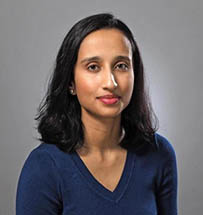
Dr, Deepshikah Ashana
Assistant Professor
Pulmonary, Allergy and Critical Care
Dr. Ashana was recognized with ASCI’s Young Physician-Scientist Award for her national leadership and far-reaching scientific impact. “Dr. Ashana exemplifies the YPSA mission through her scholarship, mentorship, and service,” Palmer said.
She has secured substantial extramural funding, including a National Institutes of Health (NIH) K23 Career Development Award and R01 Award, a Doris Duke Clinician-Scientist Award, multiple foundation grants, and serves as a co-investigator on two NIH R01 grants, reflecting her sought-after expertise and collaborative approach to science.
Dr. Ashana’s scholarly portfolio includes 55 peer-reviewed publications — more than half as first or senior author— in leading medical journals. Among them is a highly cited commentary in JAMA that has helped shape national conversations around obstetric critical care delivery and outcomes.
Her research has pushed the boundaries of pulmonary and critical care medicine. She was the first to identify systematic errors in mortality prediction scores widely used in intensive care units, raising awareness about potential bias and misclassification in clinical decision-making. She has also contributed significantly to the study of obstetric critical illness, an emerging field of public health importance as maternal morbidity and mortality remain pressing national concerns.
At Duke, Dr. Ashana plays a key leadership role. She leads her division’s “K Club,” a peer-mentoring forum for early-stage investigators, and serves as a co-director of the department’s community for career development. Nationally, she serves on multiple committees within the American Thoracic Society, helping shape policy and research priorities in her field.
Beyond her scientific accomplishments, Dr. Ashana is widely recognized for her commitment to mentorship. Her five graduate student mentees have collectively published 12 manuscripts and gone on to postdoctoral and faculty positions at institutions including Duke, Yale, Stanford, and Vanderbilt.
“Her portfolio of grants, publications, and society leadership has positioned her as a thought leader in pulmonary and critical care, particularly in advancing care for underserved populations,” said nominator Jack Iwashyna, MD, PhD, Bloomberg Distinguished Professor at Johns Hopkins University School of Medicine.
Iwashyna highlighted her leadership of a year-long national initiative sponsored by the American Thoracic Society to define research priorities for health equity in critical care. “Her ability to articulate a compelling vision, facilitate meaningful dialogue, and guide consensus decision-making among a 22-member committee was exemplary,” he wrote. “The group’s forthcoming publication in AJRCCM is expected to shape the next decade of health equity research in the field.”
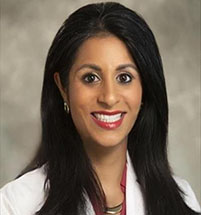
Dr. Sonali J. Bracken
Medical Instructor
Division of Rheumatology and Immunology
Dr. Bracken received an ASCI Emerging-Generation Award for her innovative translational research at the intersection of rheumatology, pulmonary medicine, and immunology. Her work focuses on how dysregulated B-cell signaling drives lung fibrosis in allo- and autoimmune disease, integrating her immunology expertise with her clinical focus on systemic sclerosis.
Since beginning her career at Duke through the NIH-funded R38 research pathway, Dr. Bracken has developed a distinctive scientific niche that reflects her independent vision as a physician-scientist. She has been mentored by Dr. Stefanie Sarantopoulos, chief of Hematologic Malignancies and Cellular Therapy, whose guidance has been instrumental in shaping the translational scope and rigor of her research program.
Her NIH K38-funded research integrates mechanistic studies using patient-derived samples with advanced preclinical models, directly linking discovery to clinical application. Her first-author publication in Blood Advances laid the groundwork for her current investigations by identifying mechanistic pathways that have directly informed her ongoing studies.
A defining milestone in Dr. Bracken’s career has been the launch of an institutional scleroderma biorepository in collaboration with Dr. Ankoor Shah. This powerful resource will support ongoing investigations aimed at developing precision medicine approaches for patients with scleroderma-associated lung disease.
Dr. Bracken’s research is supported by collaborative team science. She is a key collaborator in national multicenter efforts, including the CONQUER scleroderma registry. She is also a key contributor to the ILD-PRO working group, a collaborative initiative between the Duke Clinical Research Institute and Boehringer Ingelheim focused on advancing the understanding of progressive autoimmune lung disease.
As a junior faculty member, she has played a central role in establishing first-in-disease CAR T-cell trials for patients with rheumatologic diseases at Duke, and she has been invited to speak regionally and nationally on CAR T-cell therapy in autoimmunity. In 2024, she was presented with the prestigious American College of Rheumatology Distinguished Fellow Award.
“Dr. Bracken combines scientific rigor, originality, and intellectual curiosity with a steadfast commitment to improving patient outcomes,” said Dr. Palmer, her co-mentor.
This sentiment was echoed by Dr. Stefanie Sarantopoulos. “I am confident she will advance rheumatology through innovative discoveries.”
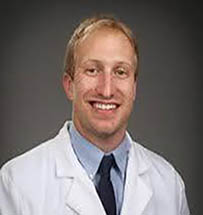
Dr. Ryne Ramaker
Fellow
Hematology-Oncology
Dr. Ramaker was honored with an ASCI Emerging-Generation Award for his work in precision oncology and rare mutation detection. His graduate research integrated gene expression profiling of pancreatic tumors with in vitro CRISPR screening to identify mechanisms of refractory disease and multidrug resistance.
His work revealed that chemotherapy resistance in pancreatic cancer involves diverse mechanisms, including drug transport, metabolic reprogramming, and epigenetic dysregulation—findings that mirror real-world clinical challenges.
As a fellow, Dr. Ramaker has transitioned to developing targeted, error-corrected sequencing assays for highly sensitive pancreatic cancer detection and for monitoring occult metastatic disease. He serves as Duke’s Precision Oncology Fellow and helps run the Duke Molecular Tumor Board, reviewing complex patient cases involving tumor sequencing each week.
He is also leading efforts to expand Duke’s molecular profiling capabilities to rural community clinics across the southeastern United States, broadening access to precision oncology.
Dr. Ramaker has published 29 peer-reviewed articles, including 10 as first or corresponding author. His work has been recognized with the Hopper Belmont Foundation Inspiration Award and the Duke Office of Physician Scientist Development Technician Award.
His long-term goal is to establish a research program developing technologies for rare mutation detection to better understand early tumor formation and translate ultrasensitive sequencing assays from bench to bedside.
In his K99/R00 proposal, Dr. Ramaker plans to analyze blood samples and surgical margins from patients with early-stage pancreatic cancer to detect microscopic residual disease. This work aims to better understand how micro-metastatic disease contributes to cancer recurrence and distant metastases.
"Ryne is an outstanding physician‑scientist who is truly working on moving discoveries from the bench to bedside to help prevent pancreatic cancer," said nominatory, Dr. Gerard Blobe, professor of Medicine in Pharmacology and Cancer Biology. "Honoring him with the ASCI Emerging‑Generation Award couldn’t be more fitting. I look forward to seeing his impactful career take off!"