
Welcome to Duke PCCM!
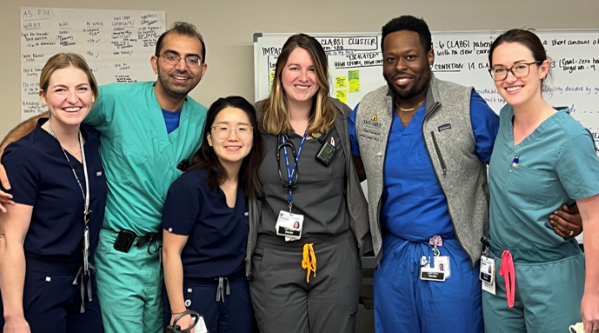
The Duke Fellowship Training Program in Pulmonary and Critical Care Medicine produces outstanding physicians who are fully prepared to pursue careers in academic medicine.
Our combined Pulmonary and Critical Care Medicine fellowship program is a three-year program. Upon completion of training, fellows are eligible for dual certification in pulmonary and critical care medicine. The American Board of Internal Medicine requires a minimum 18 months of clinical training for board certification in both of these disciplines. All fellows in our combined program engage in scholarly activity and receive robust mentorship from our world-renowned faculty. We offer a possible fourth year of fellowship for select trainees seeking advanced research training in our Physician Investigator track.
Our combined fellowship program accepts 5 fellows each year.
In their words
See why our fellows chose Duke, the strengths of the Duke PCCM Fellowship Program, and more.
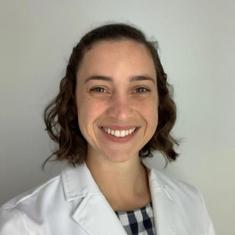
Emily Sanders, MD - Interventional Pulmonary
Emily developed an early interest in interventional pulmonology and procedural medicine, while seeking a well-rounded clinical training experience with broad exposure to diverse pulmonary and critical care disease processes. During fellowship, Emily participated in clinical research focused on advanced bronchoscopic interventions, including bronchoscopic lung volume reduction and the management of malignant central airway obstruction. She remained at Duke for advanced interventional pulmonary training, gaining experience in the management of benign and malignant airway disease, complex pleural disorders, and multidisciplinary thoracic oncology care within a highly collaborative team environment. Following completion of her Duke IP fellowship training, Emily joined the faculty at Duke as a member of the Interventional Pulmonary group.
"I chose to pursue fellowship training at Duke because of the clinical rigor, procedural exposure, and supportive faculty. By the completion of my fellowship, I felt well equipped to manage advanced pulmonary diseases as well as complex critical care including advanced mechanical circulatory support. Despite my interest in a specific subspeciality, I had the ability to develop this foundation while also tailoring my rotations to focus on IP procedures." - Emily Sanders
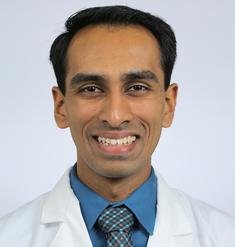
Govind Krishnan, MD - QI/Innovation
Govind completed combined Med-Peds residency at Duke, then stayed on as the Chief IM Resident for quality improvement and patient safety before joining the pulmonary and critical care fellowship. During fellowship he was able to continue his interest in quality improvement and health systems innovation, conducting multiple improvement projects, including a study using computer vision and AI to improve sleep in the ICU, which he presented at ATS. Additionally, he worked closely with his mentors to study disparities in lung cancer screening in the VA system, which resulted in several publications. After graduation, Govind joined faculty in the PCCM division at UT Southwestern, working primarily as an intensivist in the Parkland Health Medical ICU, as well as doing neuromuscular pulmonary clinic, and taking a role as one of the medical directors for clinical innovation at the Center for Innovation and Value at Parkland.
“I chose Duke for fellowship because it provided a unique combination of outstanding clinical training with renowned mentorship for scholarly work. I knew I would not have to compromise either aspect of my training if I went to Duke - I had great clinical training and feel comfortable handling anything as an attending now. At the same time, I was given the flexibility to shape my career how I want to and use my academic time to work on the projects I found interesting. This has allowed me to step into a unique leadership role straight out of fellowship. I am very grateful to all my mentors and colleagues at Duke and am so glad I chose Duke for my PCCM fellowship." - Govind Krishnan
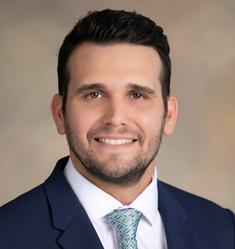
Juan Carlos Ferre Martinez, MD - Asthma/PCCM
Juan Carlos discovered a passion for asthma while working in clinic during fellowship at Duke, drawn to the instant gratification that effective asthma management provided for his patients. He valued Duke’s breadth of resources, which allow fellows to pursue many different subspecialty paths. With strong mentorship and institutional support to pursue a clinical track, Juan Carlos was able to focus his last year of fellowship doing what he loved to do: see patients in clinic and help them get better. Additionally, alongside the program director, he led a “Difficult Airway" course for his co-fellows to further develop his clinical and teaching skills. After graduation, Juan Carlos joined a private practice group in Texas to be closer to his family.
“I chose Duke for fellowship because of the incredible depth of clinical training, resources and subspecialty expertise available to support whatever path you choose within pulmonary/critical care medicine. The faculty and leadership did an incredible job at ensuring I was always supported and ensuring that Duke’s vast resources are being utilized for your education.” - JC Ferre Martinez

Courtney Lamberton, MD - QI/Global Health
Courtney cultivated skills in quality improvement and patient safety throughout her fellowship training, serving as the VA QI Fellow with a longitudinal project centered around improving shared decision-making and equitable lung cancer screening uptake among the Veteran population, and then as the Duke University Health System Chief Resident in Quality and Safety which afforded opportunities for participation in hospital-wide safety initiatives. She also took advantage of opportunities for additional training in medical education with participation in the Duke Society for Early Education Scholars and Duke GME Medical Education Leadership Track. During her final year of training, she spent time in Eldoret, Kenya for a clinical experience in pulmonary and critical care and to participate in a quality improvement and implementation project focused on spirometry training and operation at a rural clinic in Western Kenya. After graduation, Courtney joined faculty at the Warren Alpert Medical School at Brown University with clinical time centered at the Providence Veterans Affairs Medical Center allowing continued engagement in medical education and lung cancer screening work, and as affiliate global health faculty within the Brown University Center for Global Health Equity.
"I chose Duke for fellowship because I knew the program would provide rigorous clinical training, broad exposure to pathology, and an unparalleled breadth of academic opportunities. As a trainee with diverse interests, Duke stood out for its support of a flexible training experience that I could tailor to my individualized career goals. I also benefited from the ability to draw on resources and mentorship not only within the PCCM division but across the broader Duke University community. The program helped me refine my academic interests, ensured I was clinically prepared to succeed as a first‑year attending in PCCM, and provided me with lifelong mentors and friends." - Courtney Lamberton
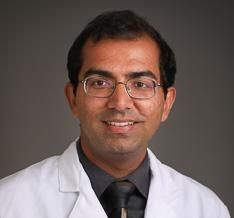
Aaditya Khatri, MD, PhD - Physician Investigator
Aaditya began his career as a physician scientist during his M.D., Ph.D. training at Duke University where he identified novel putative targets to promote lung epithelial regeneration in acute lung injury. During residency and fellowship, he made the natural transition from understanding normal lung regeneration to understanding the abnormal responses to injury that lead to lung fibrosis. He joined the lab of Scott Palmer as part of the NIH-funded R38 Sci-STARR program during which he uncovered the molecular mechanisms contributing to airway fibrosis in bronchiolitis obliterans syndrome. As a third-year fellow, he was awarded an NIH career development (K) grant to study the converging mechanisms of fibroblast activation in airway fibrosis and interstitial lung disease (ILD). He has active collaborations with faculty in the pulmonary, interventional pulmonary, and oncology divisions. He joined faculty at Duke upon graduation and is building a lab around the molecular mechanisms of lung fibrosis and establishing relationships clinically with patients in ILD clinic.
“What sets the Duke PCCM fellowship apart is that program leadership has a vision from day 0 to meet each individual fellow’s short- and long-term goals, so that every graduating fellow has built their own path and leaves the program with a unique set of skills directly relevant to their long-term clinical and academic goals. There was no other program in the country that offered me the sort of flexibility and rigor of clinical training I needed to establish myself as a successful physician-scientist.” - AD Khatri
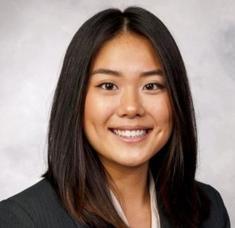
Grace Rim, MD - Lung Transplant
Grace was drawn to lung transplantation through caring for patients with advanced lung disease, witnessing the devastating impact of end-stage lung disease and the limited therapeutic options. During fellowship, she pursued advanced clinical training in lung transplantation and her research focused on risk factors and mechanisms underlying chronic lung allograft dysfunction. Following fellowship, she accepted a faculty position at the University of Pennsylvania as a transplant pulmonologist. She hopes to integrate her clinical and research training into patient care and clinical trials to advance therapies for lung transplant recipients.
“I chose Duke for fellowship training because of the unique opportunities to balance clinical and research experiences. A major strength of the program is its flexibility to tailor training toward individual career goals - whether as a physician-scientist, medical educator, or expert clinician. My training at Duke gave me the opportunity to explore different paths, ultimately allowing me to choose the career that best aligned with my goals. I am deeply grateful for my training at Duke and the environment that shaped my development as a clinician and investigator.” - Grace Rim