
Clostridioides difficile (C. difficile) is one of the most common causes of healthcare-associated diarrhea, yet not everyone who carries the bacteria becomes sick. For some, C. difficile lives quietly in the gut without causing symptoms; for others, it triggers severe, sometimes life-threatening illness. Understanding why remains a critical question in infection prevention.
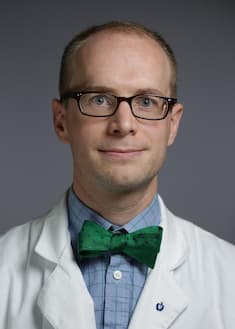
Nicholas Turner, MD, assistant professor of Medicine in the Division of Infectious Diseases, has received a K23 Career Development Award from the National Institutes of Health’s National Institute of Allergy and Infectious Diseases. The five-year, $908,484 award supports his project, Role of C. difficile Colonization in Risk of Disease, which aims to uncover how the gut microbiome protects, or fails to protect, patients from developing C. difficile infection.
“Antibiotics likely play a big role by injuring beneficial gut bacteria that protect against C. difficile, but not everyone who receives antibiotics gets sick, and not everyone who gets sick has received antibiotics,” Turner explained. “By comparing differences in gut bacteria between colonized patients who do or don’t get sick, I’m hoping to learn how the microbiome can protect against C. difficile disease.”
In addition to supporting lab work, the K23 award provides Turner with additional training in bioinformatics, equipping him with skills to analyze complex microbiome data and extend his work beyond C. difficile.
“I hope to learn how to protect patients from C. difficile,” he said, “but also to develop broader skills for understanding how the microbiome might protect against other infections, too.”
Turner’s clinical experience continues to drive his research. “I’ve cared for many patients who needed antibiotics to cure a severe infection,” he recalled. “When some later developed C. difficile, with cramping pain, fever, 10 or more trips to the bathroom a day, even septic shock, many told me C. difficile was worse than the original reason they came to the hospital. Preventing it in the first place could spare patients this misery.”
Unlike prior studies that take a snapshot of the microbiome after disease occurs, Turner’s project will track colonized patients over time to identify microbial changes that precede infection. This longitudinal approach, he says, may reveal new targets for prevention.
Turner’s multidisciplinary team includes Deverick Anderson, MD, MPH, of Duke, serving as project mentor; Jason Arnold, PhD, of the Duke Microbiome Center, as key advisor on microbiome analysis; Casey Theriot, PhD, a veterinarian and expert on the gut microbiome at NC State; and Erik Dubberke, MD, MSPH, a C. difficile specialist at Washington University in St. Louis.