
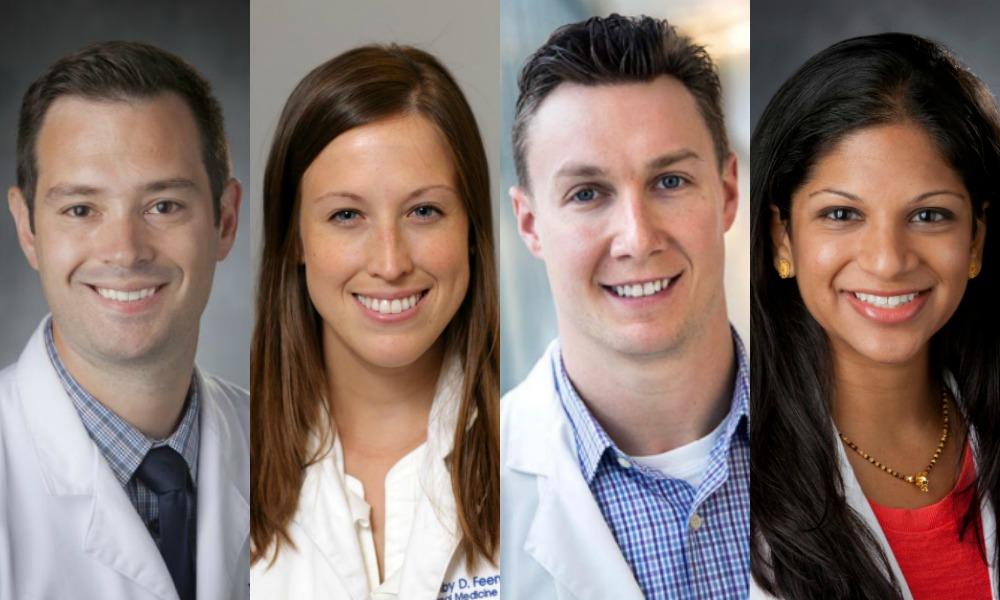
4 promoted to Assistant Professor in DGIM
We are pleased to announce four faculty promotions to Assistant Professor in the Division of General Internal Medicine, effective November 1, 2018!

Internal Medicine Residency News, Nov. 12, 2018
Catch up with the Duke Internal Medicine Residency Program by reading the weekly newsletter for Nov. 12, 2018.
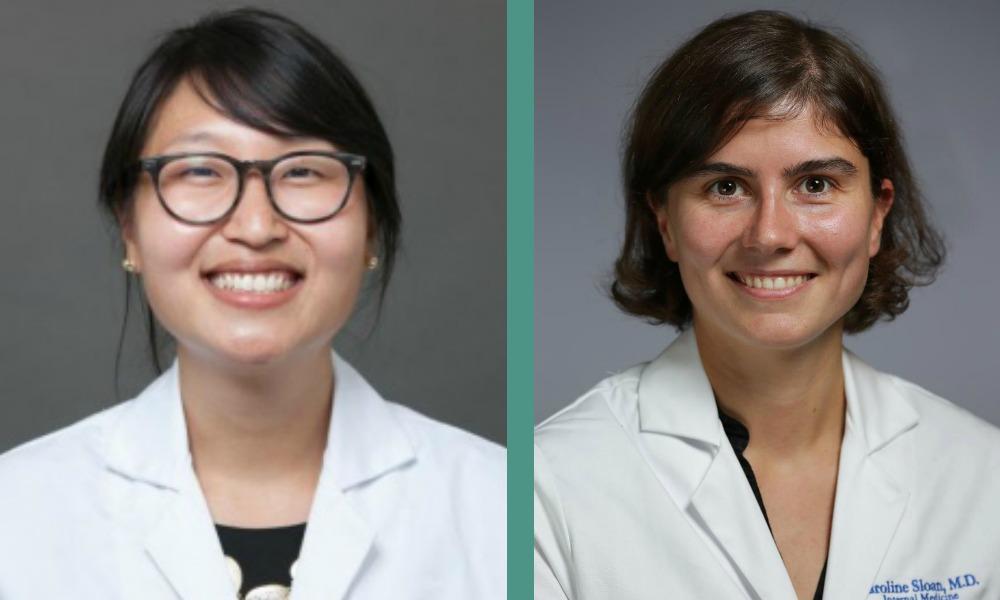
Welcome new DGIM faculty members
Do these faces look familiar to you? These two physicians completed their Internal Medicine residency at Duke this past June and have now stepped into GIM faculty roles.
Register for SoM Making the Case program, learn to transform an idea into a proposal
Register today: The School of Medicine is offering Making the Case, a hands-on, interactive program to learn the skills needed to transform an idea into a proposal.
Duke GI to present research at The Liver Meeting 2018
Faculty and fellows from the Division of Gastroenterology are heading to San Francisco this week for The Liver Meeting 2018 hosted by the American Association for The Study of Liver Diseases (AASLD).

Cameron and Teitelman-Grotegut named co-medical directors for clinical access
Blake Cameron, MD, MBI, medical instructor (Nephrology), and Melissa Teitelman-Grotegut, MD, associate professor of medicine (Gastroenterology) have been named co-medical directors for clinical access in the Department of Medicine.

Internal Medicine Residency News, Nov. 5, 2018
Catch up with the Duke Internal Medicine Residency Program by reading the weekly newsletter for Nov. 5, 2018.

Ginsburg and Orlando receive $9 million in funding for new projects to promote genomic medicine in clinical practice
The National Human Genome Research Institute, which is part of National Institutes of Health, has awarded two grants to Department of Medicine faculty that will total about $9 million over five years.